


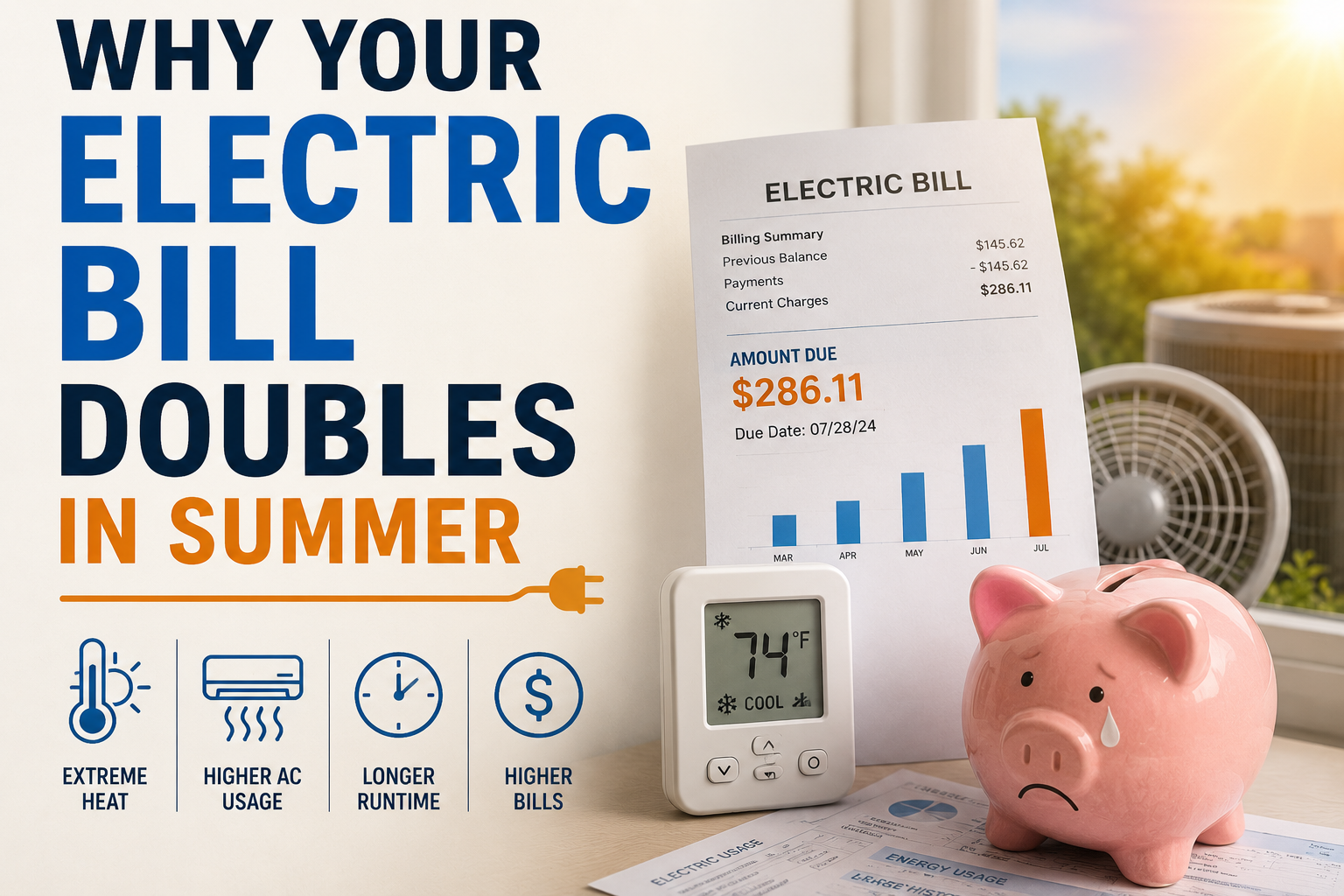
If you’ve opened your utility bill during a North Carolina summer and felt shocked by the total, you’re not alone. Many homeowners in Raleigh, NC notice that their electric bill can increase dramatically between May and September. In some cases, it may even appear to double.
The biggest reason is simple: your air conditioner becomes one of the hardest-working appliances in your home. But rising temperatures are only part of the story. Factors such as humidity, insulation, maintenance, and HVAC system condition can all contribute to a high summer electric bill.
At Klimatology HVAC, we help homeowners throughout Raleigh and surrounding areas understand what’s driving their HVAC energy costs and how to improve efficiency without sacrificing comfort.
Longer AC Run Times
The primary reason electric bills increase during summer is that your air conditioner runs much longer.
During mild spring weather, your AC may cycle on and off periodically. During a Raleigh heat wave, however, it may run for hours at a time trying to maintain your thermostat setting.
For example, if your thermostat is set to 72°F and outdoor temperatures reach 95°F with high humidity, your system has to remove a tremendous amount of heat from your home. The longer it runs, the more electricity it uses.
In many cases, longer run times are completely normal during extreme weather. The problem occurs when the system runs excessively due to inefficiency or mechanical issues.
High Humidity Levels
North Carolina summers are known for their humidity.
Your air conditioner doesn’t just cool the air—it also removes moisture. When humidity levels are high, your system must work harder and run longer to keep your home comfortable.
Many homeowners notice that their house feels warmer than the thermostat reading suggests. That’s because humidity affects how we perceive temperature. A home at 74°F with high humidity can feel much less comfortable than a properly dehumidified home at the same temperature.
This extra workload directly increases HVAC energy costs.
Poor Insulation
Even an efficient air conditioner can struggle if your home isn’t properly insulated.
Common problem areas include:
- Attics
- Crawl spaces
- Exterior walls
- Around doors and windows
Imagine trying to cool a house while hot outdoor air constantly leaks in. Your AC must repeatedly remove that heat, causing longer run times and higher utility bills.
Many Raleigh homeowners discover that improving insulation significantly reduces cooling costs.
Dirty Air Filters
A clogged air filter is one of the easiest problems to fix and one of the most common causes of a high summer electric bill.
When the filter becomes dirty, airflow is restricted. Your HVAC system must work harder to move air throughout the home, which increases energy consumption.
Signs of a dirty filter include:
- Weak airflow from vents
- Longer cooling cycles
- Excess dust in the home
- Increased energy bills
Checking your filter monthly during summer is a simple way to lower air conditioning bills.
Aging HVAC Systems
As HVAC equipment gets older, efficiency naturally declines.
A system that was highly efficient when installed may consume significantly more energy after 10–15 years of use. Components wear down, heat transfer becomes less effective, and the system must run longer to achieve the same results.
If your electric bills have been climbing every summer despite similar usage habits, your aging HVAC system may be a major contributor.
Leaky Ductwork
Many homeowners don’t realize that cooled air can escape before it ever reaches the rooms they’re trying to cool.
Leaky ductwork in attics, crawl spaces, or wall cavities can waste a substantial amount of conditioned air. Your AC then runs longer to compensate for the lost cooling.
Common signs include:
- Uneven temperatures between rooms
- Weak airflow
- Excessively long run times
- Higher-than-expected energy bills
Professional duct inspections can identify hidden leaks that are driving up HVAC energy costs.
Incorrect Thermostat Settings
Thermostat settings can have a major impact on summer energy use.
A common misconception is that setting the thermostat much lower will cool the house faster. In reality, it simply causes the system to run longer.
For most Raleigh homes, a setting around 75–78°F while occupied provides a good balance between comfort and efficiency. Raising the temperature a few degrees when you’re away can also help reduce cooling costs.
Deferred HVAC Repairs
Small HVAC problems rarely stay small.
Issues such as low refrigerant, failing capacitors, dirty coils, or worn components can force your system to consume more electricity long before it stops working entirely.
For example, a homeowner may notice that their AC still cools the house but takes much longer to do so. That extra runtime often shows up first on the electric bill.
In many cases, rising utility costs are one of the earliest warning signs that an HVAC repair is needed.
Realistic Example: Why One Homeowner’s Bill Increased
Consider a typical Raleigh homeowner whose summer electric bill jumps from $140 in spring to $280 in July.
Several factors may be contributing:
- Outdoor temperatures increased by 20°F or more
- Humidity levels are significantly higher
- The AC runs nearly twice as long each day
- The air filter hasn’t been changed in several months
- Attic insulation is inadequate
- The system is 12 years old
Individually, each issue may seem minor. Together, they can dramatically increase energy consumption.
Actionable Tips to Lower Your Cooling Costs
If you want to lower air conditioning bills this summer, start with these steps:
Replace Your Air Filter Regularly
Check it monthly and replace it as needed.
Keep Vents Open and Unblocked
Furniture, rugs, and closed vents can reduce airflow efficiency.
Use Ceiling Fans
Fans don’t lower the air temperature, but they help you feel cooler so you can raise the thermostat a few degrees.
Close Blinds During Peak Sunlight
Reducing solar heat gain helps your AC work less.
Seal Air Leaks
Weatherstrip doors and seal gaps around windows.
Schedule Professional HVAC Maintenance
A clean, properly tuned system operates more efficiently and may help reduce energy costs.
When High Electric Bills Signal an HVAC Problem
You should consider scheduling an HVAC evaluation if:
- Your electric bill suddenly spikes without a major change in usage
- Your AC runs almost constantly
- Some rooms never get comfortable
- Airflow seems weaker than usual
- The system is making unusual noises
- The equipment is more than 10 years old
These symptoms often indicate inefficiency that can worsen over time.
Trust Klimatology HVAC to Help You Save Energy
At Klimatology HVAC, we help homeowners throughout Raleigh, NC and surrounding communities improve comfort while controlling energy costs. Whether you need a system evaluation, repair, maintenance service, or guidance on replacing an aging unit, our team can help identify the most cost-effective solution for your home.
If you’re wondering why your electric bill doubles in summer, don’t assume higher temperatures are the only cause. An HVAC inspection can reveal hidden issues that may be wasting energy and costing you money every month.
Contact Klimatology HVAC today to schedule a professional HVAC evaluation and discover ways to reduce cooling costs while keeping your home comfortable all summer long.
Frequently Asked Questions
Why is my electric bill so high in summer?
The most common reason is increased air conditioner usage during hot weather. However, poor insulation, dirty filters, duct leaks, and HVAC problems can make the increase much worse.
Does humidity increase cooling costs?
Yes. Your air conditioner must remove both heat and moisture from the air, which causes longer run times and higher energy use.
Can a dirty air filter raise my electric bill?
Absolutely. Restricted airflow forces your HVAC system to work harder, increasing electricity consumption.
How can I lower my cooling costs?
Start by replacing filters regularly, sealing air leaks, using ceiling fans, improving insulation, and scheduling professional HVAC maintenance to ensure your system is operating efficiently.