

When you sign up for our Priority Service Maintenance Program you will receive bi-annual visits from our team in the Spring & Fall for preventative maintenance and discounted service throughout the year.
Regular maintenance not only keeps you in compliance with the manufacturer’s warranty on your HVAC units, it also:
- Increases energy efficiency
- Reduces mechanical failure
- Improves comfort conditions in your home
What’s more, you’ll also receive a 15% discount on future repairs should they be necessary!
The cost is the maintenance is $150/year per unit.
If you would only like a single visit without signing up for the maintenance program, then you will pay $85 for a one-time visit as needed and the 15% discount does not apply.
What Happens During a Maintenance Visit?
Our maintenance visits are comprehensive system evaluations, not just a quick cleaning. During each visit, our technicians perform a detailed inspection, testing, and documentation process to ensure your HVAC system is operating safely, efficiently, and reliably.
We check the condition of your system, measure performance, and identify potential issues before they turn into expensive repairs.
Here’s a brief overview of what’s included in your tune-up:
Heat Pump/AC – Warm Weather Maintenance
System Documentation
We start by documenting key details about your equipment so we can track performance over time.
- System type and configuration
- Areas of the home the system serves
- Equipment location
- Model and serial numbers for indoor and outdoor units
- Refrigerant type and system components
This information allows us to maintain accurate service records and diagnose problems more quickly in the future.
Indoor System Evaluation
Your indoor equipment is responsible for airflow, comfort, and air quality. During maintenance we inspect and test:
- Air filters (size, quantity, and condition)
- Blower motor performance and electrical components
- Blower wheel condition and airflow performance
- Indoor evaporator coil condition
- Temperature difference across the system (temperature split)
- Static pressure and airflow measurements
- Condensate drain operation
- Electrical component condition and safety
Photos and measurements are documented so we can monitor system performance over time.
Outdoor System Evaluation
The outdoor unit is responsible for heat transfer and refrigerant performance. We inspect and test:
- Outdoor unit model and serial information
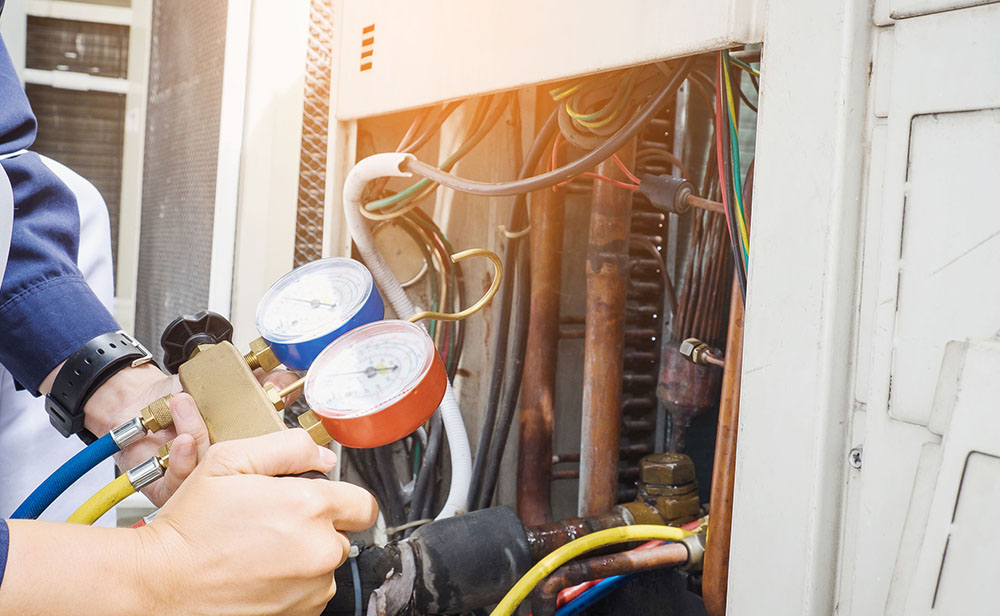
- Refrigerant pressures and system charge indicators
- Superheat and subcooling measurements
- Compressor and fan motor electrical performance
- Capacitors and electrical components
- Outdoor coil condition
- Contactor condition and operation
These tests help confirm the refrigeration system is operating within manufacturer specifications.
Additional System Components
If your home includes additional comfort equipment, we also evaluate:
- Zoning system operation
- Whole-home dehumidifiers
- Integrated accessories connected to the HVAC system
Documentation and Recommendations
At the end of the visit, we provide:
- Photos of system components
- Technician notes and recommendations
- Documentation of measurements and performance
- Any maintenance or repair recommendations
Both the technician and homeowner review and sign the visit summary so you have a record of the inspection.
💡 Why this matters:
Regular maintenance helps detect small issues early, improve efficiency, extend equipment life, and prevent unexpected breakdowns.
Furnace – Cool Weather Maintenance
System Documentation
We begin by recording key equipment details so we can track system performance and service history over time.
- Equipment model and serial numbers
- System efficiency rating (for furnaces)
- Refrigerant type (for heat pumps)
- Filter size and number of filters used by the system
- Auxiliary or backup heating configuration
Maintaining accurate records helps us monitor system performance and diagnose issues more efficiently during future service visits.
Heating Performance Testing
To verify your heating system is operating within manufacturer specifications, we measure and evaluate key performance indicators such as:
- Temperature rise across the system
- Blower motor performance and capacitor operation
- Airflow and system performance indicators
- Gas pressure for furnace systems
- Refrigeration system operation for heat pumps
These measurements help confirm your system is heating efficiently and operating safely.
Auxiliary and Backup Heat Testing
Many heating systems rely on additional heat sources during colder temperatures. When present, we evaluate and test:
- Electric auxiliary heat strips in heat pump systems
- Electrical amp draw of heat strips during operation
- Gas furnace operation when used as auxiliary heat
This ensures backup heating systems activate properly when the primary system needs support.
Safety and Component Inspection
Heating systems include several safety-critical components that require routine inspection. During maintenance we visually inspect and evaluate:
- Heat exchanger condition (furnace systems)
- Outdoor coil and evaporator coil condition (heat pump systems)
- Blower wheel condition
- Electrical components and wiring connections
- Exposed ductwork and flue piping
- Condensate drain operation
These inspections help identify wear, corrosion, airflow restrictions, or safety concerns early.
System Controls and Accessories
We also verify that system controls and connected equipment are operating properly:
- Thermostat operation
- System startup and shutdown cycles
- Zoning system operation (if installed)
- Whole-home humidifier operation (if installed)
Service Summary and Recommendations
At the end of your maintenance visit, your technician will provide:
- Notes on system condition and performance
- Documentation of measurements taken during testing
- Photos of inspected components when applicable
- Recommendations for maintenance or repairs that may help maintain system reliability