


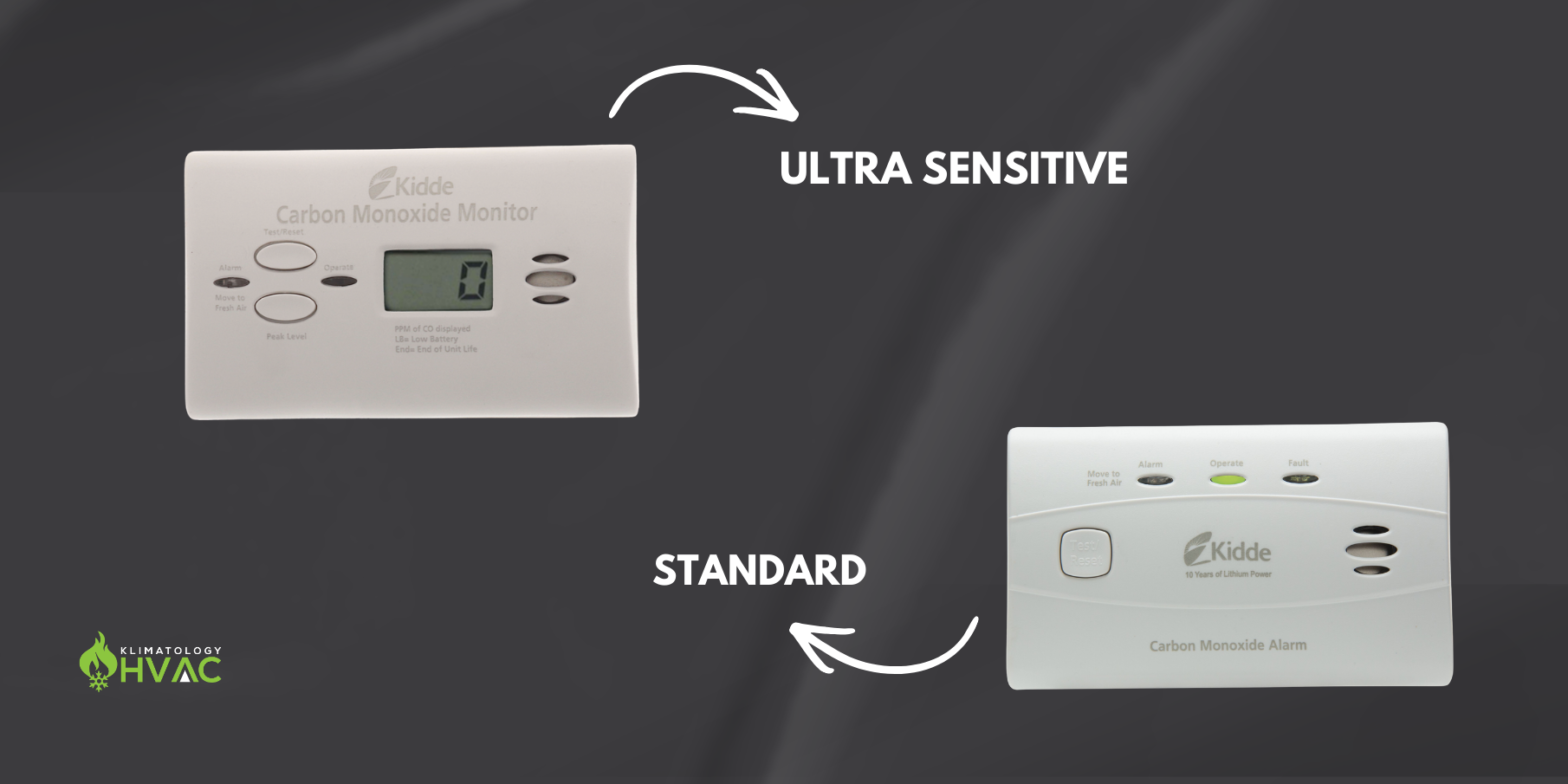
Low-level CO monitor devices are becoming more common as homeowners look for better carbon monoxide protection. Carbon monoxide (CO) is often called the “silent killer.” It’s colorless, odorless, and can build up without warning if a furnace, water heater, fireplace, or other fuel-burning appliance isn’t operating properly.
Most homes today are required to have carbon monoxide alarms installed to meet building code. But you may have heard about something called a “low-level CO monitor.” What’s the difference? And is it worth adding one to your home?
Let’s break it down in simple terms.
First: What Is a Standard CO Alarm?
Building codes in North Carolina (and throughout the U.S.) require carbon monoxide alarms that are listed under UL 2034, the national safety standard for residential CO alarms.
These alarms are designed to:
- Alert occupants before life-threatening exposure occurs
- Avoid nuisance alarms from very small, short-term CO spikes
- Follow specific time-and-concentration thresholds
For example, a code-compliant CO alarm:
- Will not alarm at very low levels like 20–30 parts per million (ppm)
- Will alarm at 70 ppm after about 60 minutes
- Will alarm faster at higher concentrations
This design is intentional. It prevents frequent false alarms while still providing protection from dangerous exposure.
These alarms are required by code, and they are absolutely essential for life safety.
What Is a Low-Level CO Monitor?
A low-level CO monitor is different.
Instead of waiting for higher concentrations over longer time periods, it:
- Displays the actual CO level in parts per million
- Alerts at much lower thresholds (sometimes as low as 10–25 ppm)
- Provides earlier awareness of abnormal combustion conditions
It’s important to understand:
A low-level monitor does not replace a code-required CO alarm. It is an additional layer of monitoring.
Think of it like this:
- The standard CO alarm protects against dangerous exposure.
- A low-level monitor helps identify problems earlier.
Why Would Someone Want a Low-Level Monitor?
There are several reasons homeowners choose to add one.
1. Early Warning of Equipment Issues
Low-level CO readings can sometimes indicate:
- Improper combustion in a furnace
- Venting or drafting issues
- Heat exchanger cracks
- Flue blockages
- Backdrafting from water heaters or fireplaces
Catching these issues early can prevent:
- Equipment damage
- Efficiency loss
- Larger repair costs
- Long-term exposure concerns
2. Peace of Mind
Some homeowners simply prefer more data and more visibility into their indoor air quality.
If you have:
- Young children
- Elderly family members
- Respiratory concerns
- A tightly sealed, energy-efficient home
You may appreciate having more information about what’s happening in your indoor air.
3. Identifying Intermittent Problems
Sometimes CO issues are not constant. They may occur only:
- During startup cycles
- During high wind conditions
- When multiple appliances run simultaneously
- When temperature differences affect drafting
A low-level monitor can help identify patterns that might otherwise go unnoticed.
Are There Downsides?
It’s important to be transparent about the nuances.
1. More Sensitivity = More Alerts
Very small amounts of CO can occur briefly from normal situations, such as:
- Starting a car in an attached garage
- Outdoor air infiltration
- Brief appliance startup
A low-level monitor may alert you to conditions that are not immediately dangerous — but still worth evaluating.
That means homeowners should understand:
An alert does not automatically mean an emergency. It may simply mean it’s time for an HVAC inspection.
2. Not a Code Substitute
Low-level monitors are not recognized by building code as a replacement for standard UL-listed CO alarms.
Your home should always have required CO alarms installed per code. The low-level monitor is an enhancement — not a substitute.
3. Proper Interpretation Matters
Because these monitors provide more detailed readings, interpretation is important.
That’s why when we install them, we also:
- Educate homeowners on what readings mean
- Provide guidance on when to call us
- Help determine whether a reading reflects a safety issue or normal operation
Does a Low-Level Monitor Make You Safer?
That depends on how you define safety.
Code-required CO alarms are designed to prevent life-threatening exposure. They do that job very well.
Low-level monitors may:
- Help identify equipment issues sooner
- Provide earlier insight into combustion performance
- Add an extra layer of information
They are not a replacement for safety standards — but they can be a valuable diagnostic and preventative tool.
Who Should Consider One?
You may benefit from adding a low-level CO monitor if:
- Your home has multiple gas appliances
- You have an older furnace or water heater
- You’ve experienced drafting or venting issues in the past
- You want enhanced indoor air monitoring
- You prefer early awareness rather than waiting for a standard alarm threshold
Our Approach
At our company, safety comes first.
We always ensure your home has:
- Properly installed, code-compliant CO alarms
- Safe combustion appliance operation
- Correct venting and drafting
For homeowners who want additional monitoring, we offer low-level CO monitors as an optional upgrade — with full education and support.
Our goal isn’t to create unnecessary worry. It’s to provide transparency, proactive maintenance, and peace of mind.
Final Thoughts
Carbon monoxide safety isn’t about choosing between “standard” and “better.” It’s about understanding the purpose of each device.
- Code-required CO alarms protect against dangerous exposure.
- Low-level monitors provide earlier insight and additional awareness.
Used together — and properly understood — they can offer a thoughtful, layered approach to home safety.
If you have questions about CO monitoring, appliance safety, or indoor air quality, we’re always happy to help.