

A Serious Safety Risk for Raleigh, NC Homeowners
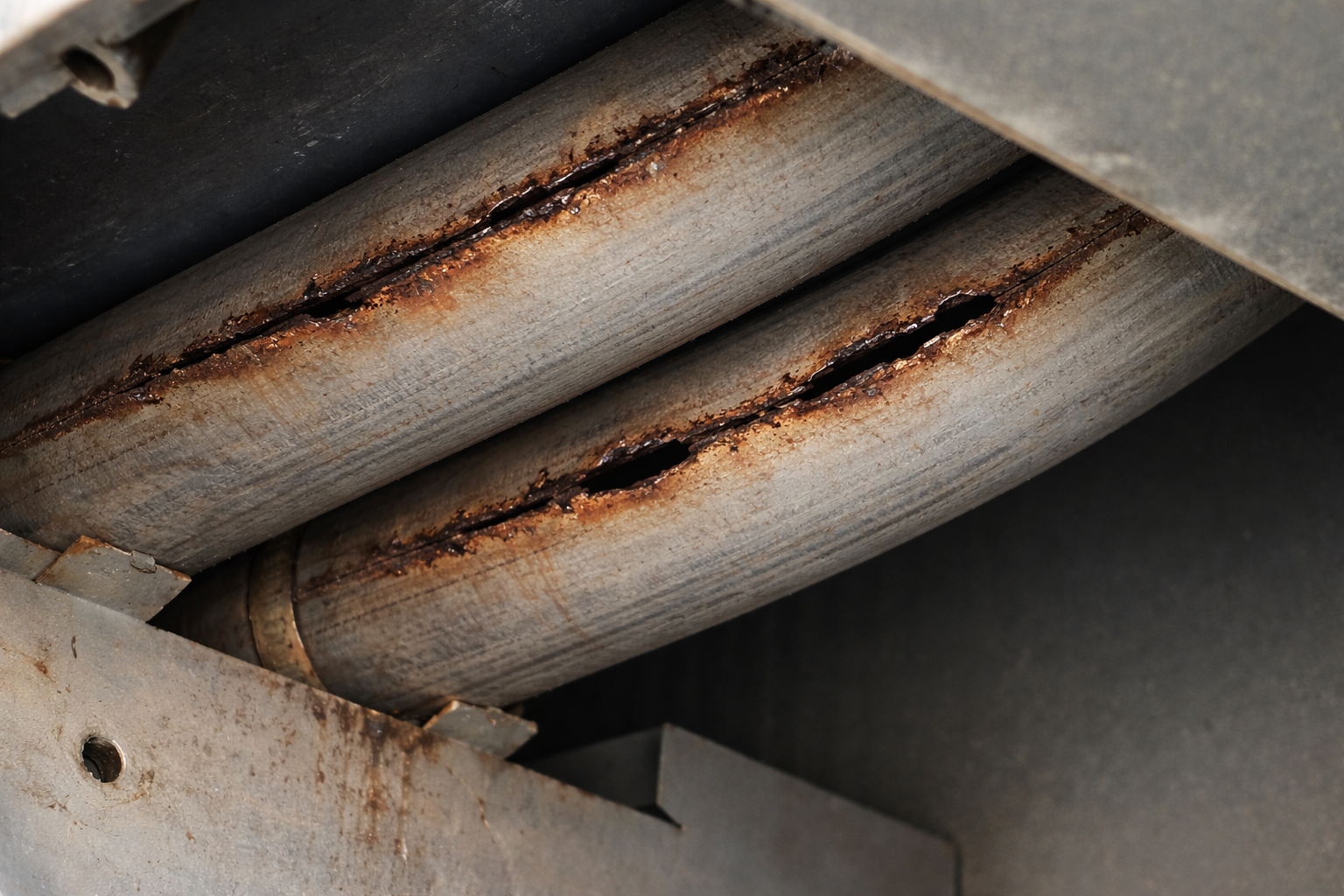
A cracked heat exchanger is one of the most dangerous issues a gas furnace can have. It’s not just a mechanical problem—it’s a direct threat to your health and safety. As an HVAC contractor serving homeowners in Raleigh and the surrounding areas, this is one of the most critical furnace problems we diagnose during heating season.
What Does a Heat Exchanger Do?
The heat exchanger is a sealed metal component inside your furnace. Its job is simple but critical:
- It contains the combustion process
- It transfers heat safely to the air in your home
- It prevents exhaust gases from mixing with indoor air
When the heat exchanger cracks, that protective barrier is compromised.
Why a Cracked Heat Exchanger Is So Dangerous
1. Carbon Monoxide Can Enter Your Home
As result as, a cracked heat exchanger can allow carbon monoxide (CO) to leak into the air circulating through your home. Carbon monoxide is extremely dangerous because it is:
- Invisible
- Odorless
- Potentially deadly
Even low-level exposure over time can cause headaches, dizziness, nausea, and fatigue. Higher levels can quickly become life-threatening.
For this reason, furnaces with confirmed cracked heat exchangers are typically shut down immediately for safety.
2. Increased Fire Risk
A damaged heat exchanger can disrupt normal combustion, leading to:
- Flame rollout
- Overheating inside the furnace cabinet
- Damage to burners and nearby components
This significantly increases the risk of fire if the system continues to operate.
3. Furnace Failure at the Worst Time
Modern furnaces are designed to detect unsafe conditions. A cracked heat exchanger often causes:
- Frequent system lockouts
- Short cycling
- Complete loss of heat
For Raleigh homeowners, this often happens on the coldest nights of the year—when reliable heat matters most.
4. Higher Energy Bills and Poor Performance
Furthermore, racks reduce the furnace’s ability to transfer heat efficiently. As a result, homeowners may experience:
- Longer run times
- Higher gas usage
- Increased utility bills
- More wear and tear on the system
Common Warning Signs of a Cracked Heat Exchanger
Heat exchanger cracks are often hidden, there are several warning signs homeowners should watch for:
- Yellow or flickering burner flames instead of solid blue
- Soot buildup inside the furnace
- Strong metallic or chemical odors
- Carbon monoxide detector alarms
- Unexplained headaches or nausea indoors
- Repeated furnace shutdowns
If you notice any of these symptoms, a professional inspection is strongly recommended.
Can a Cracked Heat Exchanger Be Repaired?
In most cases, no.
- Heat exchangers cannot be safely welded or patched
- Replacement is costly
- On older furnaces, full system replacement is often the safest and most cost-effective option
However, some manufacturers offer extended heat exchanger warranties, which may reduce replacement costs. A licensed HVAC contractor can help verify coverage.
What to Do If You Suspect a Cracked Heat Exchanger
- Turn off the furnace
- Do not continue running the system
- Ensure carbon monoxide detectors are working
- Schedule a professional furnace inspection immediately
Final Takeaway
A cracked heat exchanger is not a “wait and see” issue. It’s a serious safety hazard that requires immediate attention. If your furnace is aging or showing warning signs, a professional inspection can protect your home, your family, and your peace of mind.